
Transforming Warrior Care Through Human-Centered Innovation
Supporting Our Wounded, Ill, and Injured Service Members and Their Families
By: Paul Messier, Vice President, Federal Program Operations, Magellan Federal
Caring for wounded, ill, and injured Service members is a year-round national responsibility. For government leaders entrusted with stewarding Warrior Care programs, and the contractors who are granted the honor of delivering these services, fulfilling that commitment requires more than gratitude. It demands innovation, accountability, and integrated systems of care that produce measurable outcomes for recovering Service members and their families.
Magellan Federal has more than two decades of direct Warrior Care experience that has shaped a clear point of view: recovery is not a transaction. It is a coordinated, human-centered journey that must evolve alongside the needs of those we serve.
Modernizing the Continuum of Care
The continuum of care for recovering Service members spans medical treatment, rehabilitation, reintegration, and often transition to civilian life. Each phase presents unique challenges: physical, emotional, professional, and identity-based. Fragmented models are not sufficient.
To meet today’s demands, government stakeholders must prioritize seamless coordination across agencies, standardized recovery metrics, and shared accountability for long-term outcomes rather than short-term clinical milestones.
Magellan partners with the Defense Health Agency Warrior Care Office to strengthen recovery coordination across this continuum. Our work includes supporting policy modernization for the Recovery Coordination Program and administering initiatives such as Operation Warfighter and the Education and Employment Initiative.
Operation Warfighter connects recovering Service members with federal internships that provide meaningful engagement during rehabilitation. The Education and Employment Initiative aligns skills, education pathways, and career planning to support successful transitions beyond active duty. These programs reinforce an essential principle that restoring health alone is not enough. Recovery must also restore purpose, confidence, and long-term opportunity.
Why Human-Centered Coaching Drives Results
In an era defined by digital convenience, it is tempting to rely heavily on self-directed tools and one-time training events. Yet research and lived experience show that sustainable behavioral change rarely occurs without consistent human connection.
As federal agencies evaluate modernization efforts, it is critical to distinguish between scalable technology solutions and scalable human impact. Technology can enable care, but it cannot replace trusted relationships.
Magellan’s approach to human-centered coaching integrates evidence-based coaching, performance psychology, and enabling technology, while keeping the individual at the center. We meet recovering Service members where they are and tailor support to their unique goals, challenges, and circumstances. This high-touch model prioritizes accountability, trust, and long-term engagement.
Whole-person recovery requires more than clinical intervention. It must address mental resilience, emotional wellbeing, physical capability, and identity reconstruction in tandem. By aligning these dimensions, we create conditions for durable transformation rather than short-term improvement.
Adaptive Reconditioning: Expanding the Definition of Recovery
Recovery does not only happen in clinical settings. Through support for the Department of War (DOW) Military Adaptive Sports Program, Magellan helps expand how recovery is experienced and understood.
Adaptive reconditioning engages wounded warriors in individualized physical and cognitive challenges outside traditional therapy environments. These programs rebuild confidence, strengthen resilience, and reinforce a renewed sense of capability. Events such as the Warrior Games showcase remarkable athletic achievement, but the deeper impact lies in restoring belief and redefining potential.
Recovery is not about returning to who someone was before injury. It is about forging a stronger identity shaped by resilience, growth, and renewed purpose. Adaptive performance coaching demonstrates that adversity can become a catalyst for transformation.
Sustaining Support Beyond Active Duty
The responsibility to care for Service members does not end at transition. Veterans and families often face new challenges as they navigate civilian systems, employment, and long-term wellbeing.
As a trusted partner to the Department of Veterans Affairs, Magellan reinforces the VA Whole Health ecosystem through reintegration and readjustment services, as well as accredited Veteran Service Officers who assist with benefits navigation. Precision, compliance, and empathy must coexist in this space to ensure veterans receive the support and dignity they have earned.
Integrated care across the DOW and the VA strengthens readiness, preserves public trust, and reinforces our national promise to those who serve.
Leading the Next Generation of Warrior Care
Excellence in Warrior Care is not optional. It directly impacts operational readiness, family stability, and the long-term health of the all-volunteer force. As the operational environment evolves and Service member needs grow more complex, care models must remain adaptive, data-informed, and relentlessly human-centered.
Magellan is committed to advancing systems that integrate policy, performance coaching, adaptive programming, and veteran support into a cohesive model of lifelong readiness and resilience. By focusing on measurable outcomes and sustained human connection, we are helping shape the next generation of Warrior Care.
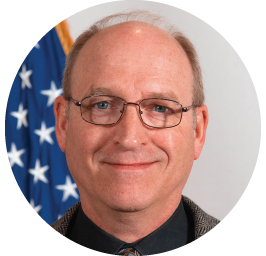 Paul Messier serves as vice president in Magellan Federal’s Workforce Wellbeing and Readiness Division. He is a retired Army officer who has led and managed numerous federal contracts delivering world-class customer services for more than a decade. As a retired U.S. Army Adjutant General Corps officer, Paul has a deep commitment to enhancing the lives of those who serve our Nation, including active-duty military and their family members, retirees, and veterans. He has a deep understanding of military culture and what it takes to deliver human-centered care, helping Service members and their families navigate life’s challenges and build resilience. Paul received his Master of Business Administration (M.B.A.) from Campbell University in 1982 and his Master of Science in Information Systems (M.S.I.S.) from the University of Washington in 2004.